Search
In April last year a report by the OPCW, the international chemical weapons watchdog, blamed the Assad regime for two sarin attacks on Ltamenah in northern Syria. The implications of this were especially serious because the attacks took place in 2017 – four years after the regime had formally…
Patrick George Zaki: detained as a "security threat"
Patrick George Zaki, a 27-year-old Egyptian, was studying for a postgraduate degree at Bologna University in Italy. In February 2020 he returned to Egypt for a family visit – only to be arrested on arrival at Cairo airport.
Zaki has been in…
Hundreds of people died – many of them in their sleep – when rockets laden with the nerve agent sarin hit Ghouta, a rebel-held area on the outskirts of Damascus, in the early hours of 21 August 2013. It was the deadliest chemical attack anywhere in the world since the 1980s and it caused…
rgb(255, 255, 204)
Chapter 16: Epilogue
The destruction of all chemical weapons declared by the Syrian regime had been completed in 2014, so when the IIT reported that the regime had used sarin to attack Ltamenah three years later the implication was that it had either secretly retained some of its…
Timeline of chemical weapons in Syria
2012
July 23: Syrian Foreign Ministry spokesman Jihad Makdissi confirms that Syria has chemical weapons.
August 20: President Obama warns that chemical weapons are a “red line” and threatens “enormous consequences” if the United States sees “a whole bunch of…
Chapter 15: Fakes and Fantasies
Advocates of conspiracy theories usually avoid questions about how any particular conspiracy might have been organised. They talk about “controlled demolitions” in connection with the 9/11 attacks but don’t explain how the buildings could have been…
Chapter 14: Questions of Confidentiality
Confidentiality was central to the OPCW's activities. Its routine work verifying compliance with the Chemical Weapons Convention needed access to information that was often sensitive – information that governments and businesses would be…
Chapter 13: ‘Alex the Whistleblower'
In October 2019 a former member of the OPCW’s Fact-Finding Mission surfaced in Brussels claiming to have emails, text messages and “suppressed draft reports” showing irregularities in the conduct of the Douma investigation. Identified only by…
Chapter 12: A leaked document
A couple of months after the Fact-Finding Mission issued its final report on Douma, the Working Group on Syria, Propaganda and Media received a document that challenged the report’s findings. It was “one of those classic moments when an unassuming…
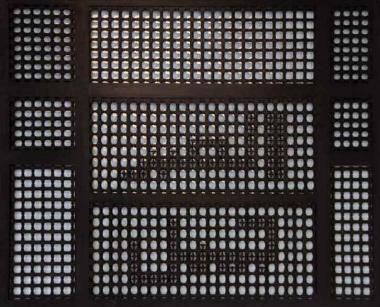
ARAB ART ONLINE: Susan Hefuna: Al Sabr Gamil (Patience is Beautiful) 2007. Ink stained on wood 140 x 170 cm. More information | Click to enlarge